
Published May 7, 2026
A wasp nest inside a wall can go unnoticed until you see wasps repeatedly entering and leaving the same small opening. Across the Greater Toronto Area (GTA), wasps may nest in wall cavities and sheltered spaces behind siding, soffits, roofline trim, and other exterior features. Because the colony is concealed, the entrance may be visible while the nest itself remains difficult to locate.
Recognizing repeated wasp activity early can help homeowners and property managers avoid disturbing the colony accidentally. It can also help them decide when a professional assessment is appropriate, particularly when the entrance is close to a doorway, walkway, balcony, or occupied room.
Signs of a Wasp Nest Inside a Wall or Roofline
An occasional wasp around your home does not necessarily mean a nest is nearby. More concerning is a repeated pattern: wasps disappearing behind the same section of siding, entering a gap near a soffit, or travelling in and out around roofline trim or a utility opening.
Some people also notice buzzing that seems to come from a wall or ceiling. Sound alone cannot confirm that a nest is present, and indoor sightings do not reveal the nest's exact location. Wasps may enter through an exterior opening or move through gaps between building cavities and occupied spaces.
If you notice recurring activity, observe the area from a safe distance. Do not tap the wall, remove panels, climb toward the opening, or attempt to inspect the cavity yourself. A professional assessment can help determine the likely source without unnecessary disturbance.
Which Wasps Nest Inside Walls in Ontario?
Yellowjackets are a common concern when wasps repeatedly enter gaps around exterior walls, siding, and rooflines in Ontario. Some species build nests in enclosed spaces, including wall cavities, where workers use a small entrance to travel between the nest and the outdoors. Gaps around siding, loose soffit panels, and utility lines may provide access to sheltered spaces.
Paper wasps more commonly build exposed, umbrella-shaped nests beneath eaves, porch ceilings, and other protected structures. Wasps flying around a roofline therefore do not automatically indicate a nest inside the wall. Identifying the likely species and nesting location helps determine which treatment options may be suitable.
Risks of a Hidden Wasp Nest Behind a Wall
A concealed nest can become a concern when it is near a front entrance, patio, balcony, walkway, or outdoor seating area. In apartment buildings and commercial properties, the same nesting site may affect residents, employees, visitors, or maintenance workers.
The main concern is accidental disturbance. Repairing siding, clearing a vent, trimming vegetation close to the entrance, or working along a roofline may bring someone close to an active colony. Wasps may become defensive when they perceive a threat to the nest.
A wasp appearing near a window or ceiling does not automatically mean the nest is inside that room. It may have entered through an exterior gap or travelled through a building cavity. A hidden nest also does not automatically mean the structure has been damaged; the immediate priorities are to reduce exposure to stings and identify the likely source before repairs begin.
People with a known severe allergy to insect stings should take particular care around suspected wasp activity. If someone develops symptoms of a severe allergic reaction after a sting, seek emergency medical assistance immediately.
Why DIY Wasp Nest Removal Can Be Risky
Spraying an entrance or sealing it with expanding foam may seem like a quick solution, but these steps can complicate treatment when the nest's location and activity are uncertain. Household wasp sprays may not reach a colony concealed deep inside a wall cavity, and spraying near the entrance can expose the person applying it to defensive wasps.
Sealing the visible opening does not necessarily eliminate an active colony and may make the access route harder to assess. Drilling into drywall, removing siding, or opening exterior panels without understanding what lies behind them can also create unnecessary risks and repair work.
If you suspect a nest inside a wall, keep children and pets away from the area and avoid spraying, sealing, or disturbing the entrance. Do not investigate from a ladder or attempt to open the wall yourself. Unless a qualified pest control professional specifically advises it as part of a treatment plan, leave the opening accessible for assessment.
Professional Wasp Nest Inspection and Treatment in the GTA
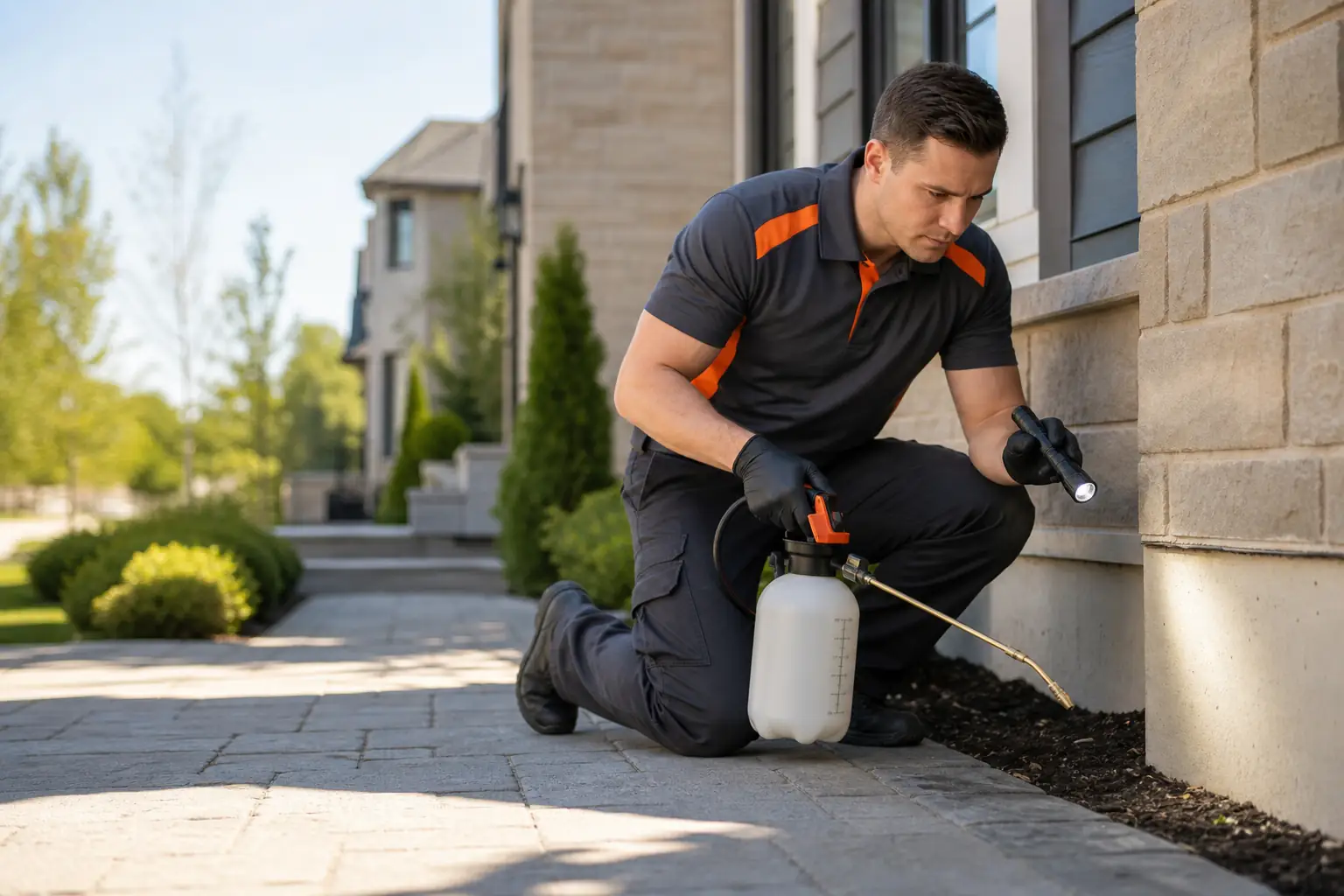
Treatment begins with assessing the wasp activity and the building features around it. A pest control professional may inspect accessible areas such as siding, soffits, roof edges, vents, and utility openings to identify the likely nesting location and consider how close it is to occupied areas.
The appropriate approach depends on the suspected species, the location and accessibility of the nest, the building's construction, and the level of activity. In some situations, treatment may be possible without opening the wall. Other situations may require a different approach or additional access, so a professional assessment is important before deciding what work is needed.
After treatment, ask the provider how long residual activity may continue, whether a follow-up visit is recommended, and when the entrance can safely be repaired. Coordinate exterior repairs with the treatment plan so they do not interfere with the work.
Need Wasp Nest Removal in the GTA?
If you suspect a wasp nest inside your wall, AM Pest Control offers wasp and hornet control services in the Greater Toronto Area. A professional assessment can help identify the likely nesting area and determine suitable next steps without relying on guesswork.
When contacting a provider, explain where the wasps are entering, how often you see them, and whether the opening is close to a doorway, walkway, balcony, or occupied room. To discuss the situation with AM Pest Control, contact the team and ask about the assessment and treatment options available for your property. For more information, visit the AM Pest Control wasp and hornet removal page.
How to Prevent Wasps From Returning
Once the nesting issue has been addressed and the pest control provider confirms that repairs can proceed, inspect the building exterior for openings that may allow wasps to access sheltered spaces. Common areas to check include loose siding, damaged soffit panels, gaps around window frames and exterior trim, openings around pipes or wires, damaged vent screens, and gaps along roof edges and eaves.
Repair suitable openings with appropriate materials while preserving required ventilation and drainage. Repair or replace damaged screens and covers rather than blocking them as a temporary measure.
Outdoor food sources can also attract foraging wasps. Keep food scraps contained, cover sugary drinks when dining outside, and secure garbage bins. These steps may reduce activity around patios and entrances, but they will not remove an established colony. If wasps continue to enter the same wall opening, seek professional guidance before sealing it.
When Are Wasps Most Active in the GTA?
Wasp activity in the Greater Toronto Area generally increases during warmer months, although timing varies with species, weather, and local conditions. Early in the season, residents may notice wasps exploring sheltered areas around eaves, rooflines, and exterior openings. As colonies develop, repeated movement around an established entrance can become easier to notice.
Later in summer, wasps may be more noticeable around gardens, patios, outdoor dining areas, and garbage bins. Increased outdoor activity does not necessarily mean a nest is inside the building. As temperatures fall, outdoor activity often declines, but fewer sightings do not confirm that a suspected nest has been removed or that a wall cavity is no longer a concern.
If wasps repeatedly enter an opening near a doorway, walkway, or occupied room, arrange an assessment based on the activity rather than waiting for the season to end.
What Property Managers Should Know About Hidden Wasp Nests
For property managers, a wasp nest inside a wall can affect several residents, particularly when it is close to a shared entrance, balcony, parking area, or outdoor seating space. Record the reported location, dates, frequency of sightings, and recurring flight patterns. Photographs of the entrance may help with an assessment if they can be taken safely from a distance.
While an inspection is being arranged, notify affected residents about the suspected activity and advise them not to spray, seal, or investigate the opening themselves. If the nest is close to a busy entrance or shared walkway, temporary measures to limit contact may be appropriate.
Responsibility for pest control and repairs depends on the lease, ownership arrangements, management agreements, and circumstances. Confirm responsibilities with the appropriate parties. After treatment, coordinate necessary repairs and retain records of the initial report, inspection, service, and follow-up.
Frequently Asked Questions
Can a wasp nest in a wall be removed without opening the wall?
Sometimes. The appropriate method depends on the species, nest location, accessibility, and building construction. Opening the wall is not always necessary, but an assessment is needed to determine the available options.
How long does wasp nest treatment take?
The time required depends on the nest's location, accessibility, treatment method, and whether follow-up is necessary. Ask the provider about the expected process and any precautions to take.
Should I seal the hole where wasps are entering?
Do not seal the opening while the nest may still be active unless the pest control professional specifically advises it as part of the treatment plan. Follow professional guidance on when repairs can safely begin.
Can wasps inside a wall enter my house?
Yes. Wasps may sometimes move through gaps between building cavities and occupied rooms. An indoor sighting does not establish the exact location of the nest, so repeated sightings should be assessed.
Does buzzing inside a wall confirm a wasp nest?
No. Buzzing can have several causes, and sound alone cannot confirm a nest. Repeated wasp activity around a nearby exterior opening is a more useful clue, though the exact nesting location may remain uncertain.
Can household wasp spray remove a hidden nest?
Household spray may not reach a colony concealed inside a wall cavity and can expose you to defensive wasps. Avoid experimenting with sprays around an active entrance and seek professional advice.
How much does wasp nest removal cost in the GTA?
The cost depends on the nest's location, height, accessibility, treatment requirements, and any follow-up work. Request a quote based on the conditions at your property and confirm the price and service scope before booking.
Does AM Pest Control offer a guarantee for wasp nest treatment?
Contact AM Pest Control to confirm its current guarantee terms, including any applicable conditions, coverage, and follow-up arrangements for a nest concealed inside a wall.
When should I arrange a professional inspection?
Arrange an assessment when wasps repeatedly enter the same opening, particularly near entrances, walkways, balconies, or occupied rooms. You do not need to wait for a particular season if the activity creates a safety concern.
Can wasps damage the inside of a wall?
A nest does not automatically mean structural damage has occurred. The main concern is usually the active colony and the risk of disturbing it. Have the situation assessed before opening the wall or arranging repairs.
Will wasps leave the wall on their own when the weather gets cold?
Wasp activity often declines as temperatures fall, but seasonal changes do not confirm that the nest has been safely dealt with. If wasps have repeatedly used an opening, get advice before sealing it or assuming the cavity is clear.
Why are wasps entering my wall but not coming back out?
You may not see every wasp entering or leaving, and activity can vary throughout the day. A visible pattern alone cannot confirm the nest's size or exact location. Observe from a safe distance and arrange an assessment if the activity persists.
Should I open drywall to find a wasp nest?
No. Opening drywall without knowing the nest's location can expose you to defensive wasps and may create avoidable repair work. A professional can assess the likely entry point and advise whether access is necessary.
Can a wasp nest in an exterior wall affect a business?
Yes. A nest near a customer entrance, staff walkway, patio, or loading area may create a concern for employees and visitors. Keep people away from the suspected entrance where practical and arrange a professional assessment.
What information should I give a pest control provider?
Describe the opening the wasps use, how often you see activity, the approximate height, and whether it is close to an entrance or occupied room. Photos taken safely from a distance may also help the provider understand the situation.