

Published November 27, 2026
It usually starts with a few bees flying around your backyard. You notice them near the deck while enjoying your morning coffee, around the garden while mowing the lawn, or repeatedly flying towards a small opening in your fence. At first, it doesn't seem like anything to worry about. But when the same activity continues day after day, you may start wondering whether bees have built a nest somewhere around your home.
If you're a homeowner in Vaughan or anywhere across the Greater Toronto Area, this is something you may encounter during the warmer months. Bees become more active as the weather gets warmer, and residential properties can offer plenty of places for them to find food and build nests.
But before reaching for an insect spray, it's important to understand what you're dealing with. Not every bee needs to be removed, and different species require different approaches. A honey bee swarm resting on a tree is not the same as carpenter bees boring into your deck or a colony living inside an exterior wall.
Knowing the difference can help you protect your family, avoid unnecessary damage, and decide when professional bee removal is the right option.
Are Bees Just Visiting Your Garden or Have They Built a Nest?
Seeing bees around your flowers doesn't necessarily mean you have a nest on your property. Bees regularly visit gardens, shrubs, and flowering plants to collect nectar and pollen. If they're moving between flowers and disappearing after a short visit, they're probably just foraging.
The situation is different when you notice the same bees returning to one particular spot. For example, you might see several bees flying in and out of a small hole in your wooden deck. Perhaps they're entering a gap beneath your shed or gathering around an opening in the ground. When bees repeatedly use the same entrance, there may be a nest nearby.
This is worth paying attention to, especially if the activity is close to your front entrance, patio, or somewhere your children and pets regularly spend time. You don't need to get close to investigate. Watching their movement from a safe distance can provide useful clues about where they're going and whether the activity is becoming more frequent.
What Kind of Bees Are Around Your Home?
One of the biggest mistakes homeowners make is assuming that every large, buzzing insect is the same type of bee. Honey bees, bumblebees, and carpenter bees have different appearances and nesting habits. Understanding these differences makes it easier to decide what to do next.
Honey Bees: Why Are So Many Bees Gathering in One Place?
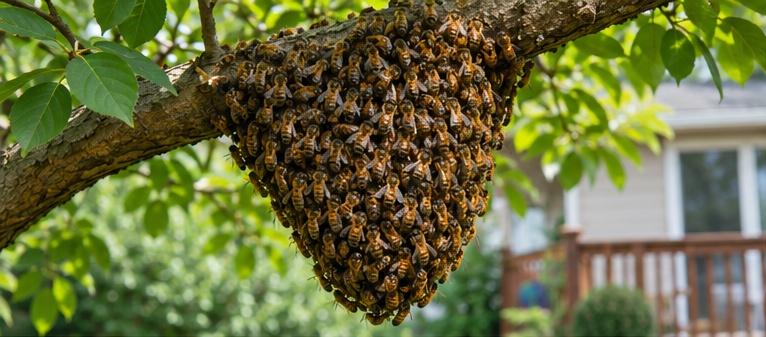
Imagine looking outside and noticing a large cluster of bees hanging from a tree branch or gathered around a fence. It can be frightening, especially when you aren't sure why they're there. What you're seeing may be a honey bee swarm.
Honey bees live in colonies, and swarming is a natural part of how their colonies reproduce. When a colony becomes ready to divide, a group of bees leaves with a queen and temporarily gathers somewhere while scout bees search for a suitable new home.
Although a swarm can look intimidating, it doesn't necessarily mean the bees have established a permanent nest on your property. A temporary swarm may move on after scout bees identify a suitable nesting location, although homeowners should not rely on this happening.
However, an established honey bee colony inside a wall, roof space, or another part of your home is a different situation. Over time, the colony can build wax comb and store honey inside the cavity. Simply getting rid of the visible bees may leave honeycomb and other nesting material behind.
If you find a honey bee swarm, avoid spraying or disturbing it. Contact a local beekeeper or an appropriate bee removal professional for advice. If the bees have established a colony inside your home, a specialist assessment is important.
Bumblebees: Why Are Bees Flying In and Out of Your Lawn?
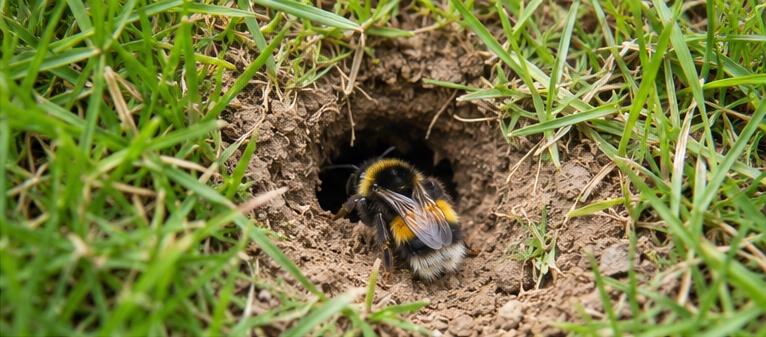
Have you noticed large, fuzzy bees flying close to the ground or disappearing into a small opening in your garden? They could be bumblebees.
Bumblebees are generally rounder and hairier than honey bees. They often use existing sheltered spaces for nesting, including abandoned rodent burrows and cavities beneath sheds or garden structures. Their nests can sometimes go unnoticed until someone starts mowing the lawn or working in the garden.
Bumblebees are valuable pollinators and generally don't go looking for trouble. However, they may defend their nest if someone repeatedly disturbs it. Most bumblebee colonies are seasonal. Towards the end of the season, the original colony generally dies off, while newly produced queens leave to overwinter and start colonies the following year.
If the nest is in a quiet corner of your garden, leaving it undisturbed may be the best option. But if it's directly beside a walkway, entrance, or children's play area, it's worth getting professional advice before deciding what to do.
Carpenter Bees: Why Are There Holes in Your Wooden Deck?
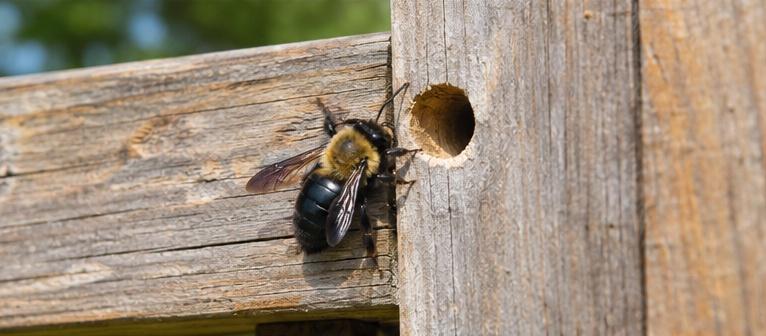
Carpenter bees are another type of bee homeowners may notice around their properties, particularly near wooden decks, fences, pergolas, and sheds. They are often mistaken for bumblebees because they're similar in size. However, one noticeable difference is their appearance. Carpenter bees have a shiny, relatively hairless black abdomen, while bumblebees have a fuzzy body covered in hair.
Unlike bumblebees, carpenter bees create nesting tunnels by boring into wood. They lay eggs and raise their young inside these tunnels. You may notice small, nearly round holes in exposed timber, along with bees repeatedly hovering around the same area.
This doesn't necessarily mean your deck or fence has serious structural damage. However, repeated nesting in the same wooden structures can cause damage over time. Female carpenter bees can sting when threatened or handled, but males cannot sting. They may still hover around people, which can make them appear more aggressive than they actually are.
If you're wondering how to get rid of carpenter bees, don't immediately fill the holes in your deck or fence. The nesting activity should be assessed first so the appropriate treatment and repairs can be planned.
Could Those Bees Actually Be Wasps?
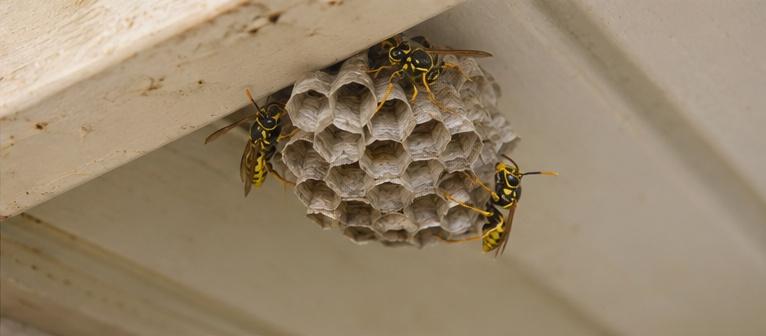
Sometimes, what looks like a bee problem is actually a wasp problem. This is quite common around Canadian homes, particularly during the warmer months when wasps become active around patios, garbage bins, outdoor dining areas, and rooflines.
Wasps and yellow jackets often have smoother-looking bodies and a more noticeable narrow waist than bees. Some build paper-like nests beneath roof edges, while others nest underground or inside concealed spaces.
The difference matters because bee removal and wasp nest removal are not the same thing. Each requires an approach suited to the insect and its nesting habits. If you're unsure what you're seeing, don't assume it's a bee nest. Getting the insect properly identified is a sensible first step.
How Do You Get Rid of Bees Without Making the Problem Worse?
When bees start gathering around your home, it's understandable that you want them gone as quickly as possible. You might be tempted to spray the area, block the opening, or try a home remedy you've seen online. Unfortunately, these approaches can create more problems than they solve.
For example, spraying a honey bee swarm can harm the bees without addressing an established colony. Blocking an opening where bees are entering a wall may leave the colony and nesting material inside the structure.
The safest thing to do initially is keep some distance and avoid disturbing the area. If the bees are near your patio or front entrance, use another route where possible. Keep children and pets away, and avoid mowing, digging, or carrying out repairs close to the suspected nest.
What happens next depends on the type of bee. A temporary honey bee swarm may be suitable for collection by a local beekeeper. A colony established inside a wall may require specialist removal and an assessment of the remaining honeycomb. Carpenter bees may require treatment of the affected timber, while a bumblebee nest in a quiet garden area may not need removal at all.
There isn't one treatment that works for every situation. Identifying the species and understanding where it's nesting are important before deciding on the next step.
Where Do Bees Usually Build Nests Around Canadian Homes?
You might not always notice a bee nest straight away. Some are easy to see, while others are tucked away in places homeowners rarely inspect.
Wooden decks and fences are common places to notice carpenter bee activity. A few small holes in the timber, combined with repeated bee activity, may indicate that carpenter bees are using the area for nesting.
Bumblebees often choose quieter spots around gardens, sheds, and lawns. Their nests may be hidden in existing underground cavities, making them difficult to spot until bees start flying in and out of one location.
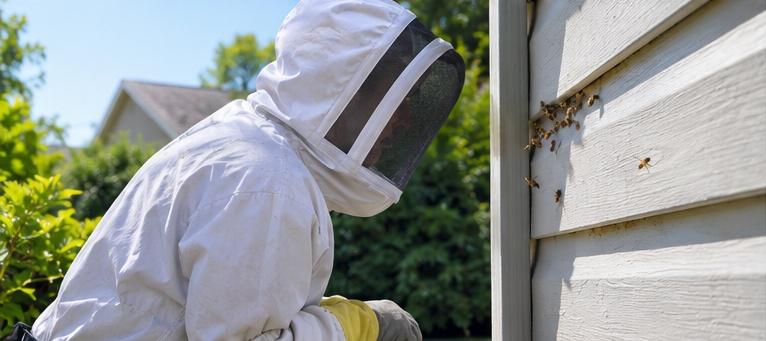
Honey bees may choose more enclosed spaces. Wall cavities, roof spaces, and openings around exterior structures can provide shelter for an established colony. Homeowners may notice bees entering small gaps around siding, soffits, or rooflines, sometimes indicating activity in a wall or attic.
If you notice bees repeatedly entering the same opening around your house, don't climb onto the roof or start removing siding to investigate. A professional assessment can help determine whether there is a nest inside the structure.
When Should You Call a Professional for Bee Removal?
Not every bee flying around your backyard needs professional attention. If they're simply visiting your flowers, there's usually no reason to interfere. However, when bees repeatedly enter the same opening, gather around a busy entrance, or establish a colony inside your home, it's worth having the situation assessed.
For example, a homeowner might notice bees entering a gap beneath the roofline every afternoon. Another might discover carpenter bee holes in a wooden deck that the family uses regularly. In both cases, identifying the species and nesting location helps determine the appropriate response.
Professional help is particularly worthwhile when the nest is difficult to access, the activity is close to areas used by children or pets, or previous attempts to deal with the problem haven't worked.
If someone in your household has a known insect-sting allergy, take extra precautions and keep away from the affected area. If a sting causes difficulty breathing, throat swelling, or other signs of a severe allergic reaction, seek emergency medical help immediately.
Looking for Professional Bee Removal in Vaughan and the GTA?
Finding bees around your home or business can be unsettling, especially when you aren't sure whether they're nesting in your deck, garden, or somewhere inside the building. For homeowners and businesses in Vaughan and surrounding York Region communities, getting the problem properly assessed is a sensible place to start.
AM Pest Control provides bee removal services for residential and commercial properties in Vaughan and across the Greater Toronto Area. Whether you've noticed carpenter bees around your deck, a suspected honey bee colony near your roof, or repeated bee activity around an entrance, the team can assess the situation and recommend an appropriate approach.
Where suitable, honey bee relocation may also be considered, depending on the service available and the circumstances of the colony. If you're dealing with a recurring bee problem, visit the AM Pest Control bee removal service page.
You can also call AM Pest Control at 416-577-4460 to discuss what you've noticed and arrange an assessment. The important thing is not to rush into spraying or disturbing the nest. Understanding what kind of bees you're dealing with is the first step towards handling the situation safely and protecting your property.
Frequently Asked Questions
How do I get rid of bees around my house?
Start by identifying the type of bee and finding out whether it's nesting or simply visiting flowers. Keep children and pets away from suspected nesting areas, and avoid spraying or blocking an entrance. If bees are repeatedly entering a particular opening or nesting inside your home, arrange a professional assessment.
What attracts bees to a residential property?
Bees are attracted to flowering plants, nectar, pollen, and water. Some species also look for sheltered nesting spaces around gardens, underground cavities, wooden structures, and buildings.
How can I tell carpenter bees from bumblebees?
Carpenter bees have a shiny, relatively hairless black abdomen, while bumblebees have a rounder body covered in dense hair. Carpenter bees bore into wood to create nesting tunnels, whereas bumblebees generally use existing sheltered cavities, often underground.
What are the small round holes in my wooden deck?
Small, nearly circular holes in exposed timber may indicate carpenter bee activity. If you notice bees repeatedly hovering around the same holes, the wood may be being used for nesting. Have the affected area assessed before filling the openings or carrying out repairs.
Are carpenter bees dangerous to people?
Carpenter bees are generally not aggressive. Female carpenter bees can sting if threatened or handled, while males cannot sting. Their nesting activity can also affect exposed wooden structures over time.
Should I remove a bumblebee nest from my garden?
Not necessarily. Bumblebees are valuable pollinators, and a nest in a quiet location may not require removal. Most colonies are seasonal and naturally die off towards the end of the season, although new queens survive to establish colonies the following year.
Can honey bees build a nest inside a wall?
Yes. Honey bees can establish colonies inside wall cavities, roof spaces, and other protected parts of a building. An established colony may contain honeycomb and stored honey, so removal may involve addressing both the bees and the remaining nesting material.
What should I do if I find a cluster of bees on a tree?
It may be a temporary honey bee swarm. Keep your distance, avoid spraying or disturbing the bees, and contact a local beekeeper or appropriate removal professional for advice.
Can I use insect spray to kill bees outside?
Spraying unidentified bees is not recommended. It can harm beneficial pollinators and may not address an established nest. Identify the insect first and choose an appropriate response.
When should I call a professional for bee nest removal?
Consider professional help when bees repeatedly enter the same opening, a colony appears to be inside a building, carpenter bees are nesting in wooden structures, or the activity is close to a frequently used area.
Does AM Pest Control provide bee removal in Vaughan?
Yes. AM Pest Control provides bee removal services for residential and commercial properties in Vaughan and across the GTA. The appropriate approach depends on the bee species, nesting location, and circumstances of the property.
How can I contact AM Pest Control for bee removal?
Call 416-577-4460 or visit the AM Pest Control bee removal page to learn more and request an assessment. Explain where you have noticed the bees, how frequently they appear, and whether they seem to be entering a particular opening.